
When his grandfather, a World War II veteran, finally decided “to get it off his chest,” he told 11-year-old Bob Beard the stories of landing at Normandy and the loss of friends/life he incurred. As a Marine Corps veteran and double alumnus of Arizona State University (ASU), Bob now serves as the Public Engagement Strategist for ASU’s Center for Science and the Imagination, where, since 2020, he has led the Veterans Imagination Project (VIP), a research-based intervention designed to improve the experience of military-to-civilian transition with the tools of strategic, narrative foresight.
How did the idea for the VIP come about? Did your own military experience (or your own re-entry experience) influence it?
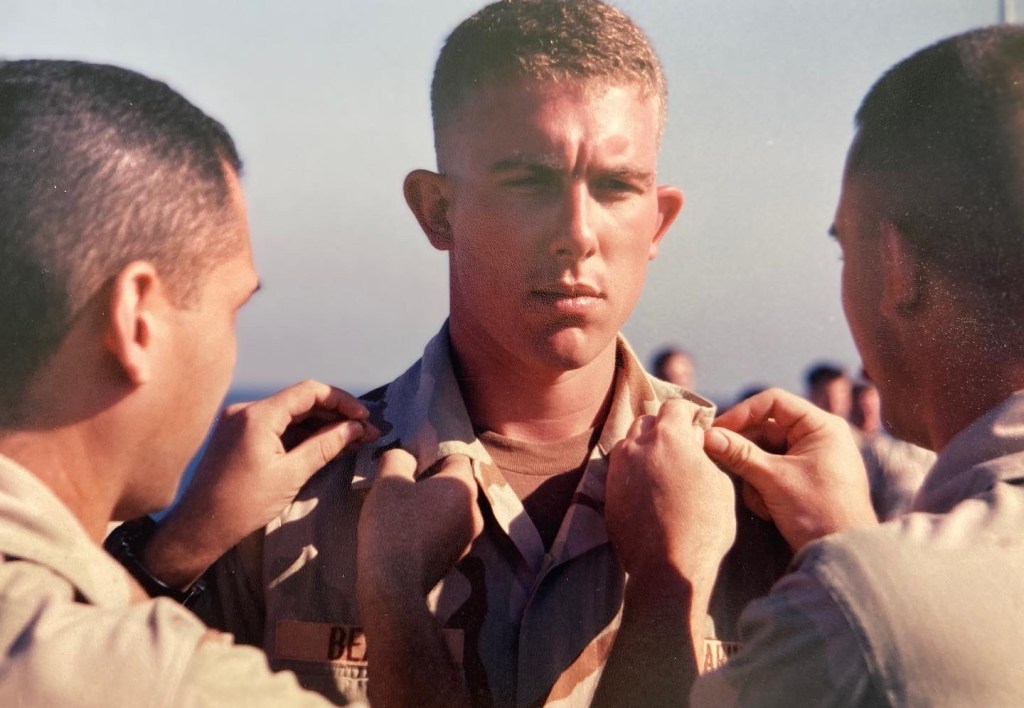
Absolutely. I left the Marines in 1999 after multiple deployments, where I was responsible for transporting ammunition and ordnance from ship to shore and back again. I joke that it was like playing Tetris with helicopters and high explosives—interesting work, to be sure, but extremely specialized and certainly not something I wanted to do for the rest of my life. Instead, I envisioned leaving the military and pursuing a degree in broadcasting—which, admittedly, was a pretty wild swing from the job the Marine Corps trained me to do. Unfortunately, there wasn’t a lot of support or guidance for me during my transition, and I entered the civilian world with more of a hazy dream about the future than any real plan.
Fast forward 15 years, after a short career in radio and TV, I found myself at the Center for Science and the Imagination, administering projects that use art and storytelling to help organizations create plausible and actionable visions of the future. During a meeting with CSI Directors Ed Finn and Ruth Wylie, I shared how beneficial the tools of foresight and collaborative imagination could have been during my transition from the military. They empowered me to research and develop my ideas further. That was really the first breadcrumb on the trail, we’re now blazing with VIP.
About how many veterans do you work with per year/cohort and what are some of your outcomes?
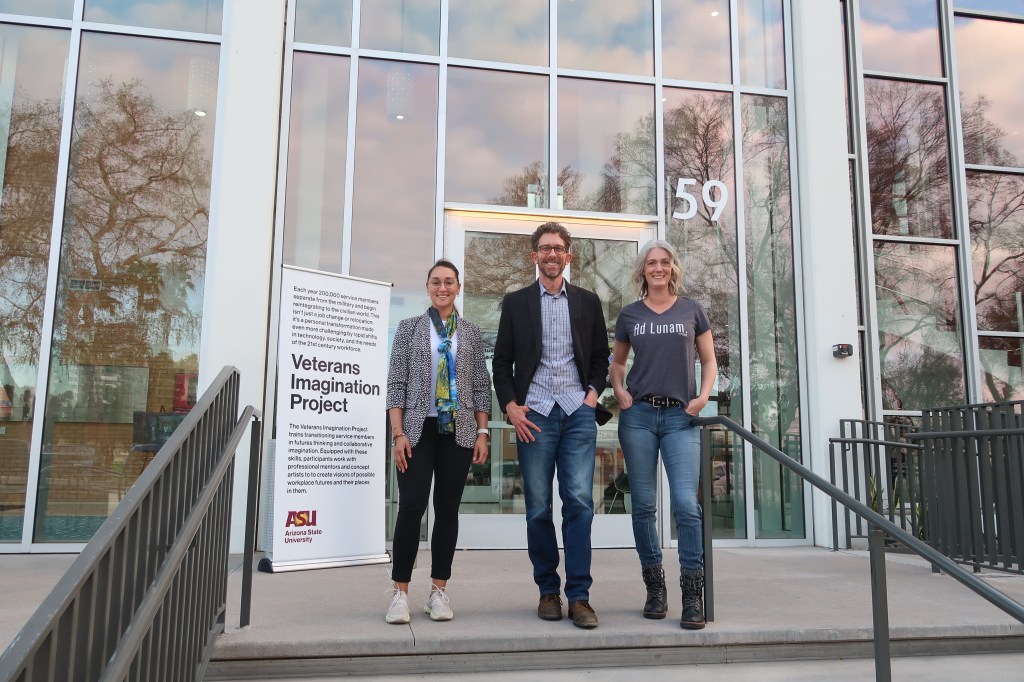
Each cohort consists of around 8–10 people, including both student veterans at ASU and other veterans from the community. Some participants are fresh out of the service, while others have been in the civilian world for years. Regardless of their background, they all work together through our process of futures thinking and narrative development.
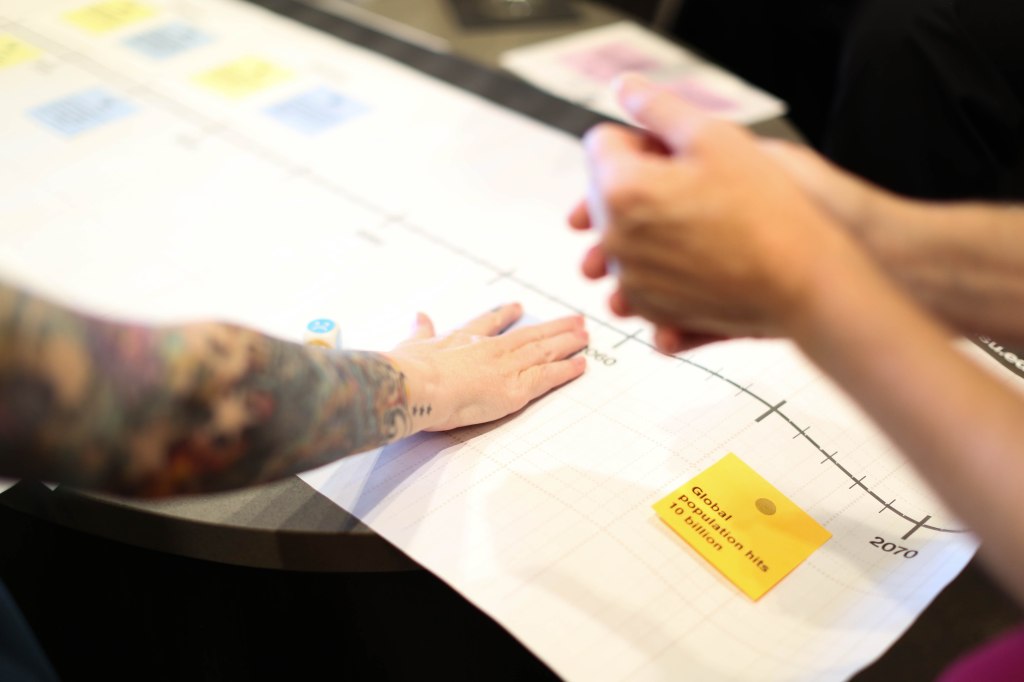
Over nine weeks, each participant researches a possible career future, meets with mentors, and creates speculative art and stories that reflect their aspirations for the world as it might exist in the coming decades. Some examples include using artificial intelligence and autonomous technologies to coordinate social services or repurposing vacant skyscrapers as community greenhouses to address food insecurity.
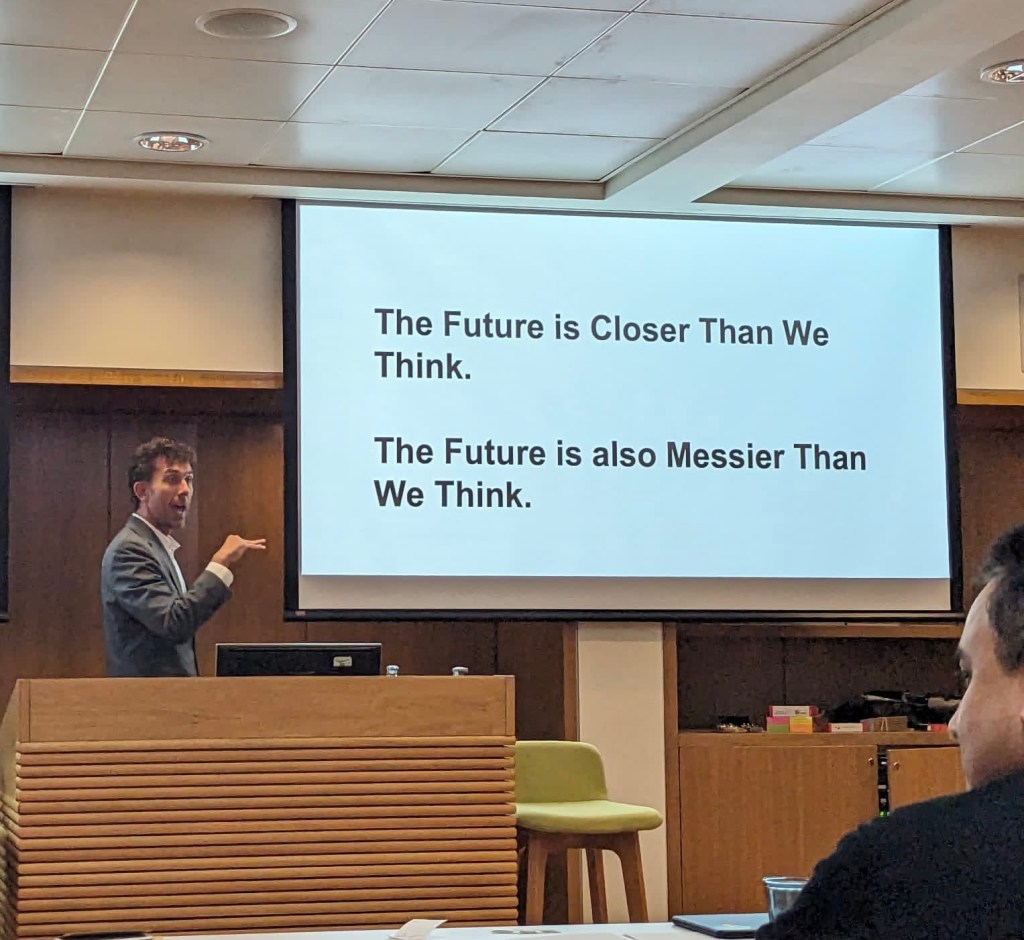
These creative outputs aren’t just for our students—we share them through publications, events, and exhibitions around the Valley as well. Whether veteran or civilian, we’re all moving into the future together. These events invite our community to engage with participants, learn more about their ideas, and make connections to people, resources, and organizations that can help turn these visions into reality.
How has the support of the ASU fostered its growth/reach/visibility?
ASU played a significant role in my transition after leaving the Marine Corps and I’ve always seen VIP as a way to extend those resources and services beyond the walls of the university. From the very beginning of this project, I’ve had the good fortune to collaborate with the Office for Veteran and Military Academic Engagement (OVMAE) and the Pat Tillman Veterans Center (PTVC) to fulfill those aspirations.
Pairing CSI’s methods and global network with the stellar reputation and influence of PTVC and OVMAE is an incredible example of how large public institutions can harness their collective capacity to serve the communities they are part of.
For veterans outside Arizona who may not have access to re-entry programs like this, what kinds of services/supports would you recommend?
The key word in this project is imagination—and that’s vitally important in the process of reintegration. Research on military transition describes this stage as a period of liminality—a space where veterans are no longer defined by their active service but have not yet fully integrated into civilian society. This can feel disorienting, but I also see it as an incredible opportunity for reinvention.
There are so many resources available in the community that offer veterans a chance to step outside the military mindset and explore new ways of thinking and being. Whether it’s art, music, yoga, gardening, beekeeping, white-water rafting, you name it— the takeaway is having the courage to get out there and practice something new.
What kind of impact do you hope the VIP will have?
A colleague of mine says, “Everyone has the right to imagine their own future.” I’m always thrilled to see the personal transformation our students experience throughout the program. Several have shared that the program changed the way they think about themselves, which is incredibly heartening and speaks to the power of developing a personal narrative during military transition.
On a larger scale, I hope this initiative can catalyze a new era of civic engagement. Military members are among the most capable individuals our society has ever produced—they embody competence, resilience, accountability, and service, all the qualities we hope to see in our leaders. Every year, over 200,000 veterans, imbued with these characteristics, return to our communities. If we can train even a subset of these individuals to anticipate change, navigate uncertainty, and imagine new ways forward, I truly believe they will lead us into a brighter future and a better world.
 ISSUED